
Understanding the players & why VCs should start to get worried
Into the Venture-verse (Part III)

Welcome to my Substack & long time no talk! If you’ve been following the “In to the Venture-verse” series thus far, we’ve been going through my experience of jumping over to early stage ventures with an overview on the venture economy in 2021. Today, I’ll be going over the key players and new incumbents who are shaping the state of venture funding.

Angel Investors & VCs
As the venture market matured since the early 2000s, so has its investors. In the early days of angel investing, select players dominated (Don Valentine - who later founded Sequoia, Tim Draper - DFJ) as most investors strayed away from high risk high return investment profiles. Come present day, angel investors have taken on a “prophet-like” status, being able to discern industry tastemakers.
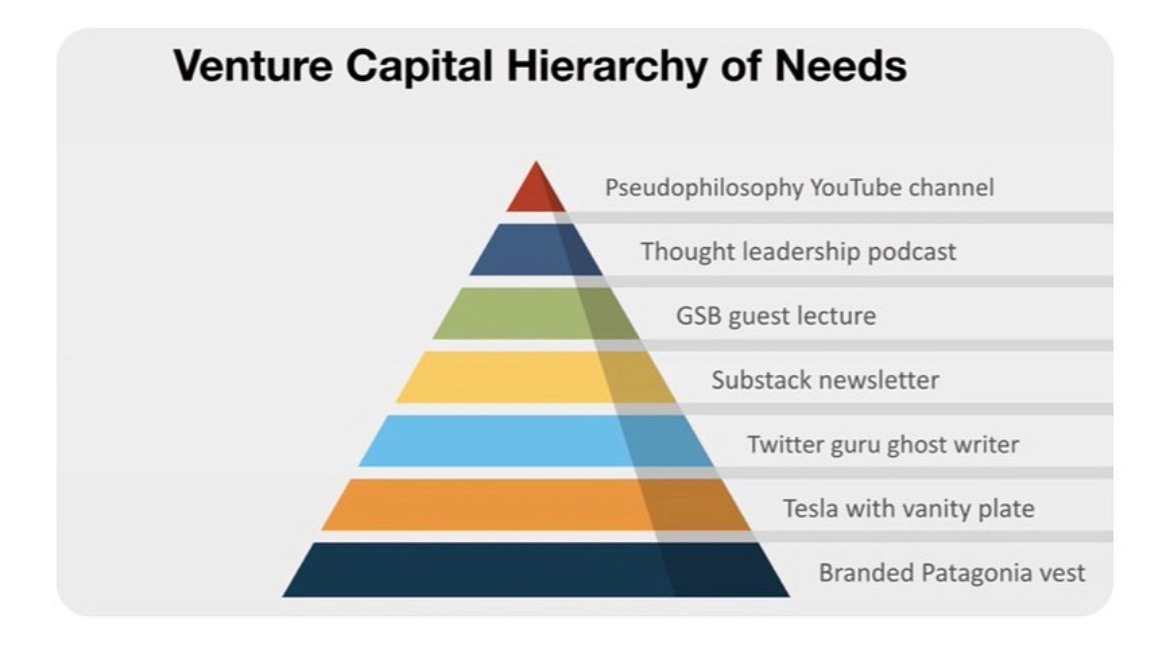
Many call a set of these successful angels who’ve written more than 150 checks “super angels” (ie; Chris Sacca of Lowercase Capital & David Tisch of BoxGroup). Within, there exists collectives of these successful founder turned VCs, who’ve developed a keen opinion on the future of industries and amassed an impressive network. As competition becomes fierce in the pre-seed stages, Angels are racing to gain notoriety in order to retain top quality deal flow. Branding for angels is as important as ever. Founders increasingly choose individuals and relationships over firms and institutions, where Angels act as the bridge to many funding rounds ahead.
On the other hand, VCs are the battery for the early stage funding rounds. In contrast to angels who write anywhere from $10k checks to $500k checks, VCs of today, depending on their assets under management and dry powder, write anywhere from $50k - $50m checks. The proliferation of the venture funding market have created a new wave of VCs that attempt to differentiate their cost of capital with laser focused investment theses. Ranging from 700+ employee teams @ Sequoia or 10+ person team @ Accomplice, the scale and breadth of hierarchy at these organizations vary from place to place as does their culture. Take for example, LightShed Ventures. I had the pleasure of interviewing with this team earlier this summer, and they are a small group of ex-Wall street TMT (Tech, media, telecomm) research veterans who have created a new VC fund to leverage their expertise.
Ranging from ex-unicorn founders, PhDs, investment professionals, and anyone with a strong opinion about anything, VCs have definitely become the “hot career choice” amongst Gen Zs. Below is a subjective ranking of the top venture capitalists.
Venture Capitalist, tiered (subjective)
Elite VC - Sequoia, Founders Fund, Kleiner Perkins
Mid Tier - First Round Capital, NextView Partners, RRE Ventures
Micro VC - boldSTART, Backstage capital
Angel Syndicates - theSyndicate.com, Angellist syndicates
Accelerators & Incubators
Let’s say your company has developed its MVP but has yet to clearly define a business plan & want advice from founders and industry leaders. You’ve come to the right place! Accelerators serve as a launchpad for growth companies to get to their Seed / Series A financing. Top accelerators typically provide a ~$100k check for a 7% stake (SAFE or simple agreement for future equity) in your company.
Notable Accelerators
Top players - YCombinator, Techstars, 500 Startups, Plug & Play center
Rising stars - Dreamit, SOSV, Food-X, Grand Central Tech
Incubators on another hand ideate & develop venture scalable companies led by serial entrepreneurs. Incubators have recently gained more traction as successful entrepreneurs have keener understandings of product market fit and have systematized a way to get a product from idea to launch very quickly. Incubators typically are laser focused on a particular problem they are trying to solve and are very research driven to solve a critical user painpoint/need. Incubators are an attractive investment vehicle as founders have greater ownership over their companies and in many cases can self service their capital and or be more cost efficient with their go-to-market plan.
Notable Incubators
Well known - Betaworks, XRC Labs
Up & Coming - Prehype, Redesign Health
Hedge Funds, Private Equity, and or “finánce”
Hedge funds, private equity, and pension funds are helping to power the venture-capital markets as the industry shatters many of the fundraising and deal-making records set last year. These so-called non-traditional venture investors are playing a major role in the venture market’s explosive growth and increased competition within the industry that has driven up fundraising speed & post-money valuations.
These crossover investors, or public market investors who also invest across the private markets, like Tiger, Coatue, and Temasek have voraciously gobbled up deals by moving at breakneck speeds and check sizes. As I was asked in an interview this past June:
VC: Brian, what do you think is more important in a VC deal in 2021? Quality of research? or Speed of execution?
Drumroll…..the answer? Speed of execution! Many would be right to say that as risky a venture investment already is, you should approach every investment with dubiety. But the nature of the industry is that getting into top quality deals have become harder than ever with these traditional investors in their endless source of dry powder. You have to realize that PE & hedge funds typically deploy later stage checks, sizes of which at the level of Blackstone and KKR reach tens of billions of dollars. In contrary, a mid-sized VC firm will have an AUM of $100-300m, where VCs are scrappily deploying capital. Such dynamics have really challenged the traditional venture model and have added increasing pressures for traditional VCs to add additional services to spruce up their offerings.

Alternative Capital Platforms
Amongst all the dogfighting happening with traditional investors and VCs & Angels, there are the new entrants that add even more confusion to the funding markets. I’ll delve deeper into adjacent markets like alternative assets that are powered by these platforms (ie; Fundrise, Topshot, Rally Rd) in a future post to come. In loosely defining the categories in the alternative capital platform space:
Alternative Financings: Clearbanc, Capchase, Pipe, Republic
Private investing marketplaces: Caplight, CartaX, Hum
P2P Financings: LendingClub, Funding Circle
Alternative capital platforms can generally be categorized as funding sources that are not from the above traditional sources. Whether that be tech-enabled funding marketplaces like Hum or ARR conversion trades like Pipe, these are tech players leveraging massive amounts of data to scale deals and minimize cost of capital for companies. In the last 24 months, platforms that offer specifically non-dilutive capital for recurring revenue businesses have gained major traction.
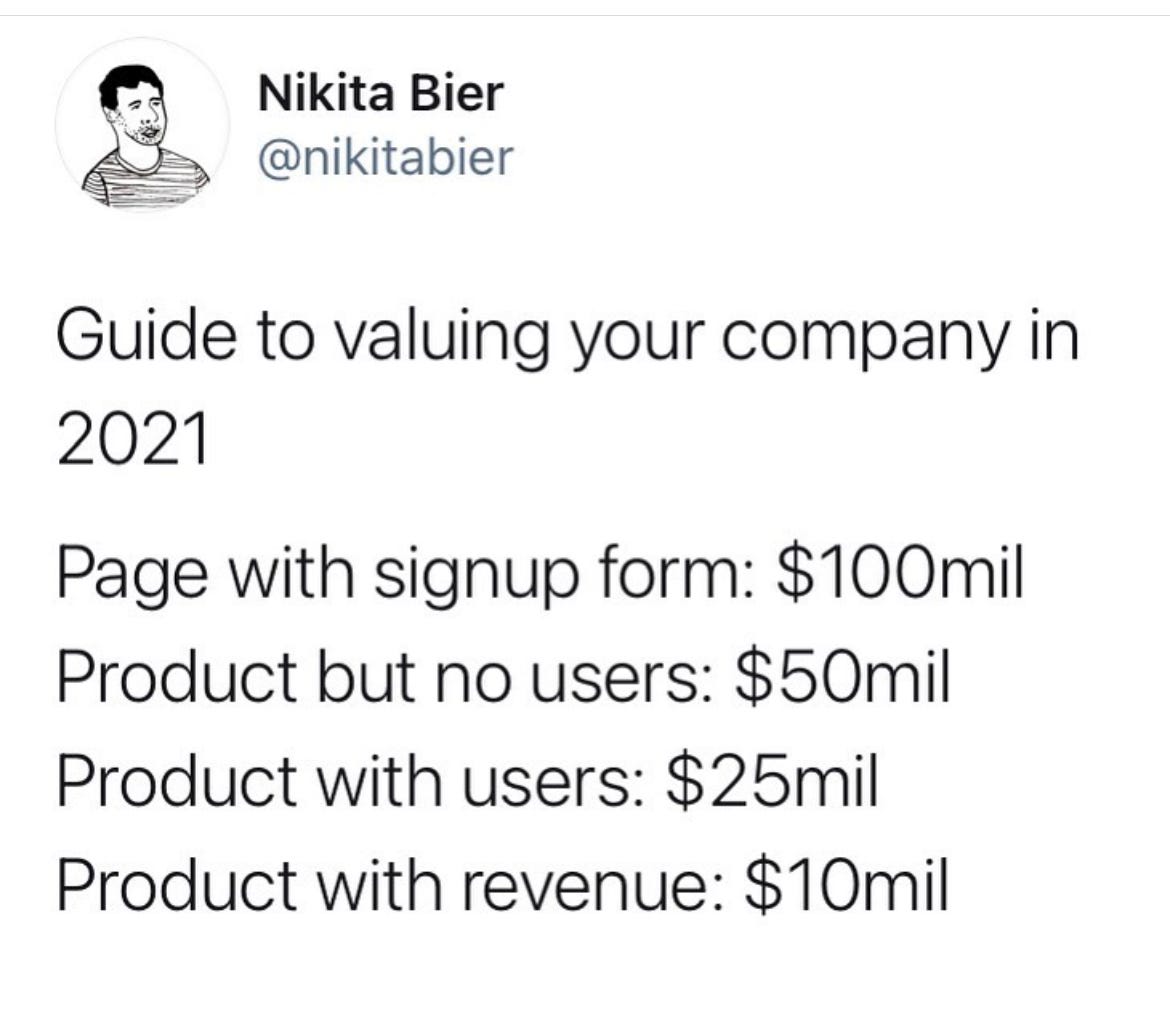
Pipe’s recent $2.0Bn valuation & Capchase’s $200m raise shows growing interest and buy-in from institutional investors who are providing capital and venture-backed companies. As dilution (or the reduction in the ownership percentage by issuance of new shares) becomes a major focus for founders as capital becomes plentiful, founders are looking towards these alternative platforms as a means of supplementing their traditional venture financing needs.
Equity crowdfunding platforms have also gained major traction as RegCF regulations have eased earlier this year, adding to the growing demand in retail early stage investing. As the recent publicly traded Robinhood democratized trading with its zero-fee brokerage model, I believe that the private markets will soon be as easily accessible like retail investors trading public equity. In addition, I’m convinced that there will be a great consolidation amongst the players like Angellist, Republic, and StartEngine as quality of deals become more scarce and customer acquisition costs increases, where crowdfunding giants will duke it out with institutional VCs and crossover investors.
So… why should VCs start to get worried & Conclusion
As mentioned previously, 2021 is a founders market for financing. VCs, on top of fundraising from LPs, need to be kept abreast of making sure their investment thesis is laser sharp in differentiating their capital amongst the crowd. If VCs keep chucking their capital across hoping for a unicorn, well that word will quickly be heard across the valley and founders will be reluctant to work with an investor because it seems that they aren’t value-additive & just looking for returns.
Non-lead VCs in funding rounds are also hard-pressed to show what strategic partnerships and deals that they can unlock with their capital, which creates greater stress for VCs to attract top Partners + invest more deeply in their talent & platform - squeezing more of their management fees. But at the same time they need to get into the best & earliest cap tables on the most reasonable terms to maximize returns. If they are deemed too expensive, well - they are easily replaced and heck we may throw in an equity crowdfunding pro-rata to our cap table instead.
All of that mumble jumble nonsense basically illustrates the debacle that VCs are facing as they tackle competition like they have never seen before. VCs must be able to sympathize with founders to grow their network & invest into top talent, constantly benchmark their performance, track their portfolio companies, all the while optimizing their management fees. Needless to say, it’s a tough job that isn’t getting any easier. As technology-enabled alternative financing platforms create abilities for constant streams of private financial data, private funding will be even more interesting as it becomes less and less personal but more systematized like NASDAQ or NYSE.
I believe that over time, VC will become just like any other private capital and will lose its differentiated classification. Yet, the question that constantly is in my mind is how early will investors fund an idea & at for what price? The thirst to 2x, 3x, and 4x their investments have created massive repercussions in the venture economy. Companies like Zymergen, a synthetic biology company has imploded in its share price after an IPO this April. Without product market fit, Zymergen received gargantuan investments from Softbank & other VCs (other examples include Nikola, Theranos, Quibi). The lack of hygiene in the private investing marketplace in lackluster diligence and overzealous funding to pump up venture valuations has devastated employees who work to generate returns from their equity. The suspension of disbelief in the venture markets are ultimately fueled by its market makers and it is an undeniable responsibility for the venture capitalists to maintain a sense of integrity and reason in their investments. I hope that as the market matures and as more entrants come into play, more protection from the federal government can safeguard the playing field for all founders and employees.
Thanks for reading! Next time we’ll delve into the final chapter of the series in figuring out your ideal startup!